Friday, December 31, 2010

Thanksgiving in Rome


A gift of our time in Italy has been the opportunity to live so close to family. Joe's younger sister, Angela, lives in Rome with her husband, Marco, and their two, young children, Luca and Eva. Here we are, gathered in their home to share an American Thanksgiving with their close friends.


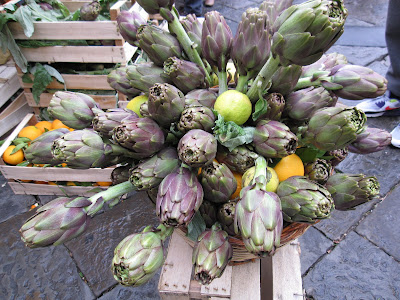
Special for Sophia and Josephine was the chance to walk with their aunt to her neighborhood markets and help her shop for local ingredients.


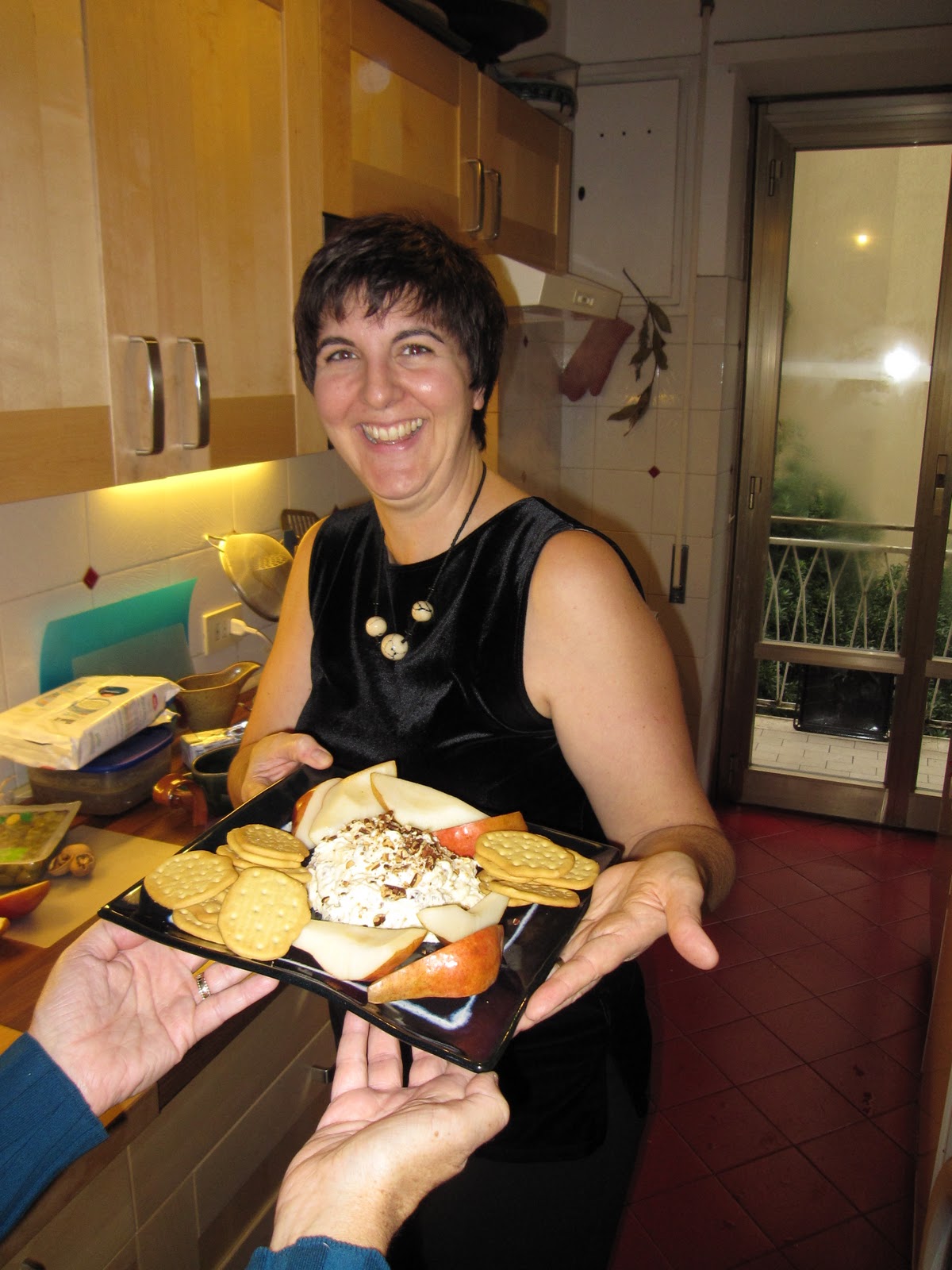
Next, they helped scoop the squash, chop the olive tapanade, blend the cheeses, toast the pecans, roast the fennel, arrange the pommegranates, and the flowers, and the Clementines and the nuts and then, set the table.

(We all learn a lot from Angela, who is a wonderful person and one of the Orlando "Top Chefs.")


The friends started to appear.... and the food started to disappear!

We'll never forget Thanksgiving in Rome with Angela and her family. It left us grateful for her, for Marco, Luca and Eva, the bonds we have with them and the special time we have this year to be together. 

Vatican City

For Thanksgiving, we travelled to Rome and spent a day in Vatican City. Vatican City is actually a tiny, independent country with two huge sights for us visitors:
St. Peter's Basilica and the Vatican Museum.


Vatican City is the religious capital of 1.1 billion Catholics. It is about 100 acres in total, contained within these Roman walls. It has it's own postal system with it's own Vatican City postage stamps. It has a helipad, radio station and is protected by these Swiss guards.

By the way, Swiss guards (who wear uniforms designed by Michelangelo) apply for their positions and must be Swiss nationals (who are perceived as the finest soldiers), speak 4 fluent languages, including Latin (which is, yes, still a spoken language), be between the ages of 18 and 24 years old and celibate (no dating allowed), and (get this) MUST be "good looking."(Is there a panel of judges?) After they return home from their two-year tour of duty, the Vatican City Swiss guards can find a job anywhere.


Rather than spend the hours needed to explore the Vatican Museum, we learned a bit about Michelangelo and the Sistine Chapel from our fabulous guide (and friend of Joe's sister, Angela) Caitlin, and bee-lined right to it, passing many other lavish ceilings along our way through the papal palace. 

 
Twice a week, the Pope greets and blesses crowds that gather in St Peter's Square. The Basilica was closed on the day we visitted as the Pope presided inside.
(The big screen in St Peter's Square allows anyone to get "up close and personal" with the Pope.)


The Square was originally a huge, Roman, chariot racecourse and a popular place for persecuting early Christians. The "new" St. Peters was built at the start of the Rennaissance in 1506 and surrounded the "old" St Peter's, which was built by Costantine in 313 AD and eventually dismantled and carried away.


284, 56-feet high columns line the elliptically-shaped square. This ring of columns symbolizes the arms of the church, welcoming everyone, believers and non-believers alike, with it's motherly embrace.


Vatican City and St Peter's Square were full of Roman character, church history, and Renaissance beauty, places to get "up close and personal" with Italy, and, to each other!


Sunday, December 5, 2010

Grape and Olive Country

Just outside the busy, city center of Florence lies a beautiful countryside of Tuscany, the region of Italy that produces some of the best wine and olive oil in the world. We took a 20-minute busride here to this area, known for "Chianti Classico."

Two decades ago, members of the Corsini family of Florence took residence in one of their age-old villas. Here, they began wine and olive oil production from the vineyards and groves owned by their family since the time of Michaelangelo.


Corsini wine ages in the cool temperatures that lie below the villa's property. Some wine ages in these wooden barrels, others in these large metal and concrete vats.


"Vin Santo" is a sweet wine made from the grapes drying in this upper level room.


Chianti Classico wine meets specific standards and is bottled and labelled like this,


sealed with the family crest like this,


and is tasted like this.


The final olive harvest is in late November. Olives are transported from the Corsini groves to the family villa for production.

Olives are first separated from their leaves and stems, then pressed and separated from the meat of the olive (which looks like wet concrete here, but smells wonderful and is seasoned and cooked as an Italian dish.)


Olives and pits are pressed again with this metal churn.


Italians once used this large concrete wheel to press olives and these clay vats to separate olive oil from the water in olives. Oil would rise above the water in each vat and then drain to the next vat through these spouts.


 Oil from the first press of the season is bright green in color, spicey in flavor, and bottled and served as Italy's "Olio Nuovo".


Corsini oil ages in these beautiful, clay vats in the villa until...


...private clients and restaurant owners purchase bottled oil and wine, or carry it away in these re-fillable jugs.


After our fill of Corsini wine and oil, we waited for the next bus home to Florence, not in any hurry to leave this beautiful grape and olive country of Tuscany.


Thursday, December 2, 2010

The Extraordinary Ordinary


After three months, we realize that what we find as extraordinary in Italy is very ordinary in our world here.


In late November, markets were still full of  fresh, colorful foods and flowers.
Foods and flowers are so extraordinary here that, sometimes, we can't tell which is which.


Cars are extraordinary, too. Many are electric and most are small.

"Fresh" pasta is served 24-7 from these vending machines just off the street. Extraordinary!


Extraordinary art and design, old and new, is everywhere.


While we are thousands of miles from home, we can be made to feel right at home here in an extraordinary way.


One of the most extraordinary things happened one night while we were walking past the Duomo. We discovered that we were walking on grass! Yes. For a festival honoring the city of Florence, sod was laid around the Duomo for the weekend.


And, David started moving around. It was a type of extraordinary "Where's David?" game in Florence.


David, who was first placed on top of the Duomo by these huge cranes,

 
became an extraordinary sight under evening spotlights.


At one point, David was placed in the back of the Duomo and along side these extraordinarily dressed guards.


Finding David was extraordinary, and one of the ordinary things on our world here in Florence.